A Gentleness More Potent than Death in “Midwestern Skulls for the Broken Latino” by Roy G. Guzmรกn

Read โ€œMidwestern Skulls for the Broken Latino” here.

For the past week, a dead squirrel has lain in the berm a block from our house. I walk by it every day taking my daughter to school. Sometimes I remember to cross the road before we get to it. Sometimes I donโ€™t remember itโ€™s there until I smell it. I try not to look. After the weekend, I forgot it was there, and when I looked down, I saw its faceโ€”which on Friday had been the peaceful, eyes-closed, sleep of deathโ€”was peeled back entirely. The skull was empty and picked bare, probably by ants. The body remained furred, but that naked skull was startling.

What do we do with death? We try to keep separate from reminders of it. Death is one of the truths of life which we have no control over, so why think about it? Or we cover fear with faith, a set of precepts or promises that can make us feel safe. Some choose to stare deeply, to inure themselves to the grim inevitability. But who can smell week-old death, who can see the bare skull, the rotting body of roadkill up close, without feeling a little uncomfortable in their own flesh? These questions rise to the surface as I read and reread Roy G. Guzmรกnโ€™s poem, โ€œMidwestern Skulls for the Broken Latino.โ€

This poem is a tension rod holding death on one end and gentleness on the other. The image of a fox sets up how death and gentleness reside in the same body, are two ends of the same thing:

People who crave the jaw
& not the foxโ€™s gentle tailโ€”
            his land mine
            of teeth

The pairing continues throughout, a whirling two-step, first toward blood, then toward softness. Racoon feet are made into a necklace which a woman giving birth wears. Secrets are โ€œrolled into the mouths / of strangersโ€ while a โ€œfather can make up / sufferingโ€™s seasons.โ€ Guzmรกn builds the image of a child in a garden and follows it with a shipwreck and a jawbone cup which is โ€œhanded down / for all to drink from.โ€ Finally, the tension is drawn taut enough for this revelation: the speaker becomes the fox which has been dismembered, eaten by a coyote, and used as a vessel for drink:

I appear deadโ€”
but here, here in my chest, is where my father
            finds the new continent
            of directions measured in forgiveness.

The father, the cause of suffering in the poem, is gifted the grace of the fox, the unasked-for โ€œgentle tail.โ€

Something about this poem is so kind, even with all its focus on death, even as it draws our attention to the cruelty of humans, to our obsession with the bodies of dead animals. Guzmรกn questions the choices of the people described here but does not condemn. In fact, the speaker offers forgiveness. The broken body offers forgiveness. Within this generosity lies the miracle of the poem.

The poem brings into focus peopleโ€™s cruelty to other people. The ways in which oppressors blithely uses human bodies in the pursuit of personal gain:

                                                Did they really mean
to leave us shipwreckedโ€”those sailors
who recognized flesh but not what the flesh
                                    can camouflage?

The intention doesnโ€™t change the outcome: death comes, and it too often comes by human hands. But the fact that the speaker even asks the above question show such generous empathy. What can better break our oppressive behaviors than such tenderness in the face of violence?

This poem isnโ€™t like my hackneyed roadkill story. The poem dwells within the corpse. There is no separation between the skull and the speaker. They become, in the end, the same creature. I think thatโ€™s how this poem manages to keep death from swallowing it whole. The fallen are granted enough agency and power here to, in the end, find peace and offer it to the father, the sailors, the people with fresh blood on their fingers.

Guzmรกn, Roy G. “Midwestern Skulls for the Broken Latino,” Catrachos: Poems, 2020.

Time, Air, and the Body in “Sway” by Ada Limรณn

Read “Sway” here.

Many of the poets I admire mostโ€”poets like Marie Howe, Adrienne Rich, Lucille Clifton, and Ada Limรณnโ€”have a way of speaking in plain English with a needlepoint precision that reaches the center nerve of feeling. Limรณnโ€™s book The Carrying is full of such poems. I decided to look a bit more closely at the poem โ€œSwayโ€ from this collection because it exemplifies simplicity of language paired with intellectual/emotional precision. (An interesting note about this poem is that it was written to and in conversation with another excellent poet, Natalie Diaz. For more poem-letters between Diaz and Limรณn, check out the anthology They Said: A Multi-Genre Anthology of Contemporary Collaborative Writing.)

Nothing about the spoken language of this poem is especially striking, except for the rather large matter of arrangement. Iโ€™m reminded in this poem that interesting verbs/nouns only take a writer so far. Surprising images and lyric leaps are what this poem relies on to vivify the language. Take for example this personification from early on in the poem: โ€œI slept again once the Pink Moon / moved off a little, put her pants back on, let me be.โ€ Who else has imagined the waning crescent as a woman putting her pants back on? I mean, it makes total sense: we all know what โ€œmooningโ€ means. But Iโ€™ve never seen it put so comically and informally in a poem.

Another way Limรณn builds interest with simple diction is with color. Color, in fact, is very important to the poem. Named colors include pink, red, blue, green, and purple. The poem takes place in spring, and these colors lend to thoughts of the coming flowers. But the color which dominates the poem is red. Red becomes metaphor here, a way to talk about anger and pain: โ€œRed, // like our rage. The red of your desert. Your heart too.โ€ This thread is an undertone, a bass beat, to which Limรณn returns in a list of plants filled with the senses. Some I can taste or smell, all create a sense of peace for me, and the colors evoked create a full color palette:

Maybe this letter is to say, if it is red where you are,
know there is also green, the serrated leaves of the dandelion, lemon balm,
purple sage, peppermint, a small plum tree by the shed.

Limรณn also manipulates two very common words into complex ideas: air and time. Limรณn speaks of the body throughout this poemโ€”โ€œmy body feels at ease,โ€ โ€œwill throw my body toward him,โ€ โ€œa body on a bridge,โ€ โ€œa body of air.โ€ The body is approached in two directions, first, physically, through the senses as they experience the natural world, plants and colorโ€”airโ€”and second, through conceptual thought and ethereal experienceโ€”time. These two directions seems to be inextricably linked. Limรณn writes: โ€œWhat is it about words that make the world / fit easier? Air and time.โ€ Air seems to be the medium through which feeling flows, an easiness with the physical world. Time is an integral part of the speaker, perhaps what she focuses on most as she moves through the world. A neighbor says to her, โ€œWhen I see you, I become very aware of time.โ€ Of herself, she says, โ€œI was alone and I was time.โ€ As the speakers focuses more fully on time, she seems to be in opposition to air. Here is a longer quote from the close of the poem:

โ€ฆI know that last night, the train came roaring

right as I needed it. I was alone and I was time, but
the train made a noise so I would listen. I was standing so

close, a body on a bridge, so that I could feel how
the air shifted to make room for the train. How itโ€™s easier

if we become more like a body of air, branches, and make room
for this red charging thing that barrels through us,

how afterward our leaves shake and stand straighter.

Time seems to be distracting the speaker at the start of this quote, and she is woken to her immobility, her inflexible nature, by the sound of the train and the sense of the air moving around it. This final metaphor is a tying together of the concepts of time/air and the red of anger. The speaker wishes not for the red, the โ€œheart berry,โ€ to disappear, but rather to be open to its passing through, to be capable, like air, of bending around this emotion that is so dense it feels physical.

I think what astounds me most in this poem is how much Limรณn is saying. Nothing here is erudite or overly complex, but the more I explore it, the more I see the deep pool of this poem. The waters are calm, but the layering of meaning dives far into the cool darkness. The passion is understated and unadorned, not exclamatory. But richness abounds in the simple words, carefully ordered into a nuanced depiction of the human experience.


Limรณn, Ada. “Sway,” The Carrying, Milkweed Editions, 2018, pp. 76-77.

Spare Words, Lush Words: Taylor Johnson’s “Virginia Slim”

Read Johnson’s first “Virginia Slim” here and the second here.

Thereโ€™s a magical thing that happens when I copy a page or two from a book of poetry and begin marking them up with pencil. Something about messing up the page helps me begin to see the poetโ€™s writing process, to see form that was unclear in the clean book. When I first read two poems, both titled โ€œVirginia Slim,โ€ from Taylor Johnsonโ€™s book Inheritance, I had an idea something interesting was going on. The title was the first clue, of course, but only after I laid these poems side-by-side did I begin to see what was really going on.

The first โ€œVirginia Slimโ€ we encounter when reading the book is unconventional on the page; most of the lines are nearer the right margin, spaced to create a kind of curve in towards the center of the page and then back out to the right margin. But a few words (seven total) are left adjusted. These are so distanced from the ones on the right that it is difficult to tell with certainty where they fall in the lines, which led me to read the poem two ways: first, as two separate stanzas or sections, and second, with both columns together, piecing the lefthand words into the righthand section. The left-justified words are a sharp distillation, the least number of words with which the poem can create meaning and emotion. They are enough, just barely:

muscadines 


by lamplight

green hope


bit,

black

The space helps, too, adding weight, adding the room the reader needs to manifest image from word. And the image is so clear: the grapes, unripe green globes, are โ€œbitโ€ and then โ€œblack.โ€ The ripening of the fruit begins with hope and is fulfilled in the tasted sweetness of the black grape. But the muscadine is more than itself, of course.

Along the righthand side of the page, some of the narrative begins to fill in. The speaker becomes present, as well as another person: โ€œI lit his cigarโ€; โ€œI rode / to the edge of / his house.โ€ The relationship isnโ€™t clear, though there seems to be a power dynamic of some sort, where the speaker is constrained by or indebted to this other person. The hope of the lefthand section is missing. Johnson writes, โ€œ โ€“ I stuffed my mouth / landlessโ€ and โ€œwhat are you supposed to believe; / am I              to enter the world / low:       in the dirt:โ€

Read together, the lefthand side becomes less hopeful, and the โ€œbit, / blackโ€ grows sinister rather than sweet:

                                                                                what are you supposed to believe;
green hope                                                             am I             to enter the world
                                                                                              low:             in the dirt:

bit,

black

The speaker is the grape, and the ripening is a coming of age. But the bitterness here is that the speakerโ€™s ripeness is pain, too: they enter the world without agency, and hope gives way to mistreatment. The color association is an overt reference to racial injustice which the speaker endures. The sliver of hope which remains is present through the framing of these lines as a question.

The second โ€œVirginia Slimโ€ is more standard in appearance, and it includes much more narrative than either portion of the first โ€œVirginia Slim.โ€ It describes a southern morning in the country:

                โ€ฆThe land
leaning in the pines,
the well, cattails,
muscadines, hot metal
in the shed, chicory on
the stove at twilight.

The images are lush and warm, and they give way to a narrative about the speaker riding in their grandfatherโ€™s truck, considering their inheritance and coming of age, their place in the world, and the injustice of life as well as the beauty. Johnson writes:

                        โ€ฆWhat
did I know about being
hunted? I knew
everything. The meek
donโ€™t inherit shit โ€“ I 
stuffed by mouth with
pine needles and spit, bled
and spit, at the 
root, and look where itโ€™s
got me โ€“ landless.

and also

me and my green hope
pressing through the 
black. How else am I
supposed to enter the 
world if Iโ€™d already left
once: as myth: not set
apart: but as a small
shelled thing: low:
toiling in the dirt: lifting
every bit of black to
breathe

Despair, yesโ€”but also triumph. Johnson doesnโ€™t negate the difficulties of life as a black, queer person in America. But they donโ€™t disparage the hope, the striving toward life, either.

And now, for the magical moment. I looked at these two poems and realized the first โ€œVirginia Slimโ€ is nearly a perfect erasure of the second. Only one phraseโ€”โ€œ. I lit his cigarโ€โ€”is included in the first poem and not the second. Thus, the narrative builds and is fleshed out in degrees: first we have the seven-word version; then the slightly longer telling of the entire first poem. But with this second โ€œVirginia Slim,โ€ we get a whole world. The hope, despair, and loveliness. The love of the grandfather. The home, the inheritance, in all its imperfection. The first โ€œVirginia Slimโ€ moves only one word out of order for its erasure. The โ€œmythโ€ which builds at the end of the second poem is present instead at the beginning of the first:

                                                                                                           velvet
                                                                                                        myth
muscadines                                                                             at twilight.

Johnsonโ€™s circle is close to perfection for me. The myth builds, dissolves in despair, and is reborn. As a writer, Iโ€™m especially drawn to Johnsonโ€™s choice to keep both these poems. Sometimes, I whittle down a poem to its barest structure and think Iโ€™ve distilled it into its best form. But Johnson holds both versions up as complete. I agree. Not only are these poems both complete and captivating, including both versions enhances each. The initial โ€œbit,โ€ / โ€œblackโ€ becomes โ€œlifting / every bit of black to / breathe.โ€ How beautiful, this resurrection, this unfolding from spareness to lush detail. Johnson is able to find themself and the legacy of their family. Trauma and goodness, woundedness and resilience, despair and hope. May we all find ways to lift those mired in prejudice and racism toward breathing.


Johnson, Taylor. “Virginia Slim,” Inheritance, Alice James Books, 2020.

The Simple and the Sublime in โ€œIce Stormโ€ by Robert Hayden

Read โ€œIce Storm” here.

Robert Haydenโ€™s posthumous collection American Journal is filled with secret pains and guilts, remembrances, and tributes as Hayden reflects on his life and builds a collection which ultimately interrogates life itself, death, spirit, God, and the dubious possibility of continuance after death.

I think the framing of this book is supported by some of the larger, more epic or elegiac poems such as โ€œElegies for Paradise Valley,โ€ โ€œBoneflower Elegy,โ€ and โ€œ[American Journal].โ€ Poems between these pillars are like the foliage, the life-giving green, and I found โ€œIce Stormโ€ to be one such, powerful in its carefully crafted simplicity.

โ€œIce Stormโ€ is deceivingly simpleโ€”thereโ€™s not much there on the page, and what is there is mainly in plain, Germanic language. But the shortness of the words, paired with the lyric structure and reined-in form, creates poem not soon forgotten.

An average conversation in English will yield at least 1.5 syllables per word. โ€œIce Stormโ€ has just 62 words, comprised of 83 syllables, or 1.33 syllables per word. The diction here is not flowery, Latinate, nor academicโ€”not at all what one might think of as โ€œpoetic language.โ€ In fact, it is even less florid than the average conversational diction would be. What this means is that Hayden didnโ€™t pick simple words because they were what first came to mind; he deliberately simplified his language as much as he possibly could. This sparseness mirrors the sparse imagery in the poem: the moon and winter trees, the ice and snow. The landscape is bare. So is the language. This parallel wouldnโ€™t necessarily be noted just in a first reading of the poem, but it is felt as an emptiness, perhaps tinged with despair, and creates a vivid tone.

In the final stanza, the first two lines have a higher syllable-per-word count, which serves to build some energy before the epiphanic and lyric last two lines, which contain almost entirely one-syllable words and releases the energy in a final prayer. This prayer takes on greater significance considering the first lines, โ€œUnable to sleep, or pray, I stand / by the window looking out.โ€ Only after seeing the ice storm can the speaker find prayer:

The trees themselves, as in winters past,
will survive their burdening,
broken thrive. And am I less to You,
my God, than they?

Only here in the last two lines are we removed from imagery into the speakerโ€™s mind. As in many great image-rich poems, this final, ungrounded, and rather metaphysical pondering is only able to engage the reader because of the great image-building done throughout the rest of the poem. I think here of the ubiquitous โ€œLying in a Hammock at William Duffy’s Farm in Pine Island, Minnesotaโ€ by James Wright, which employs the same technique. Only a poet with meticulous craft can pull off this type of lyric poem without sounding moralistic or proselytizing.

An additional strategy Hayden uses in this poem is adherence to form. Although the poem is free verse, each stanza follows a pattern of syllables: lines one and three are long (seven to nine syllables), line two is slightly shorter (six to seven syllables), and line four is about half the length of lines one through three (two syllables). The shorter final lines create a jagged, ungrounded sense to the poem, and unfinished-ness which references the speakerโ€™s unease. Death is an unknown, God is silent but for the ice on trees. The speaker hopes for salvation, hopes to โ€œthriveโ€ as do the trees, but the hope goes unanswered.

Yet, at the same time, I hear in the poem a parallel to the biblical parable of the lilies of the field in which Jesus asks his listeners to consider how God cares for the flowers: โ€œWherefore, if God so clothe the grass of the field, which to day is, and to morrow is cast into the oven, shall he not much more clothe you, O ye of little faith?โ€ (Matthew 6:30). Perhaps these two questions echo through each other into eternity, the perpetual interplay between faith and mortality.


Hayden, Robert. โ€œIce Storm.โ€ Collected Poems, Liverlight Publishing Corporation, 1996, p.175.

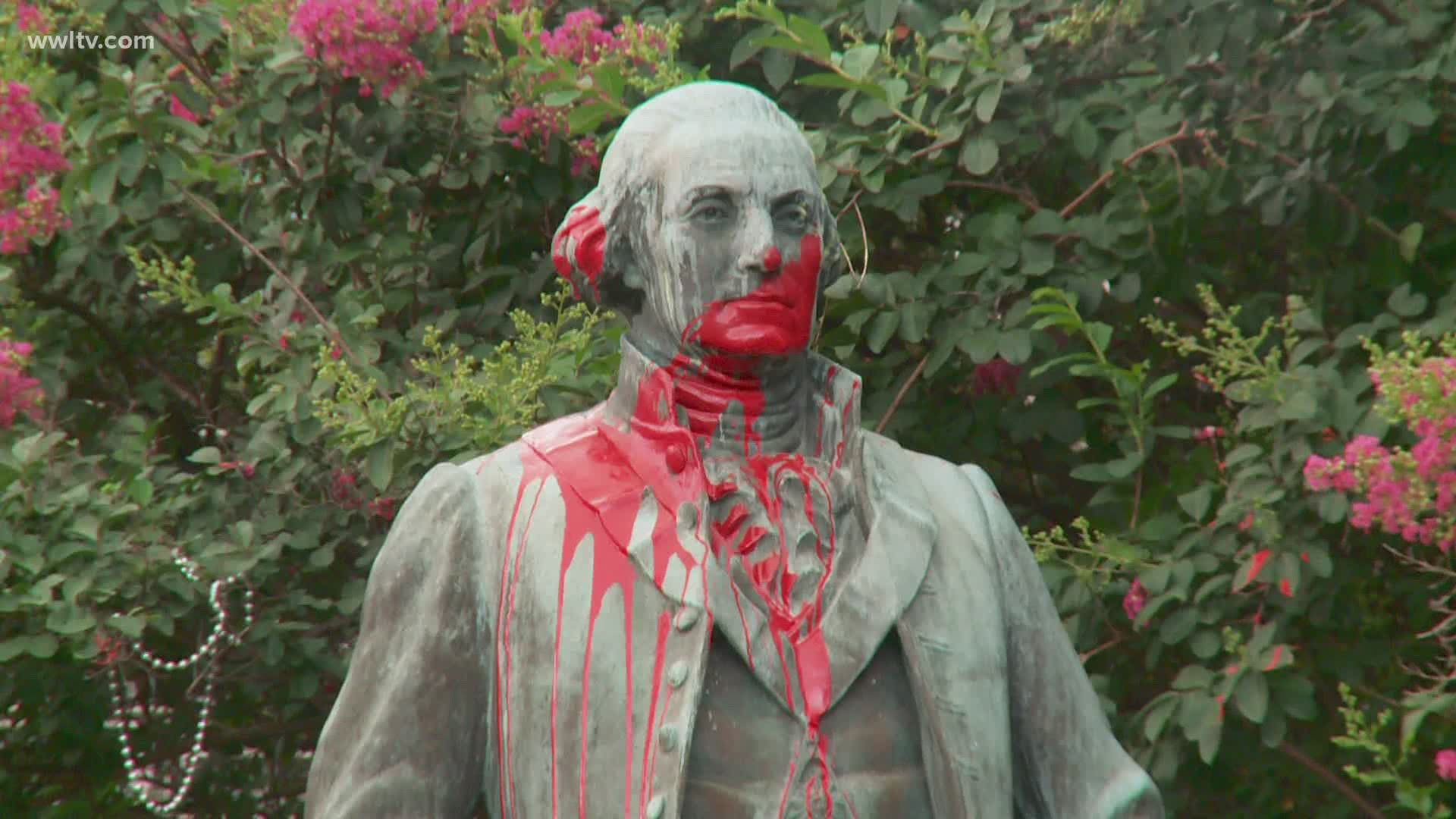
A Study in Disappointment: “George Washington; The Whole Man” by Diane Wakoski

Read โ€œGeorge Washington; The Whole Manโ€ here.

Who is the George Washington that Diane Wakoski presents to us through The George Washington poems? He seems a shapeshifter, a metaphor for many things: old lovers, her father, capitalism, the United States. But he is also himself, a version of himself, the man we Americans love through legends, and the man we revile for the ways he betrayed us. The final poem in the collection seems to be an encompassing of all that has transpired; titled โ€œThe Whole Man,โ€ we see Washington as prism, four aspects parsed through four poem sections.

The poem begins with an introductory stanza, which seems to foreshadow each section of the poem. The first and last line speak of โ€œdisappointment,โ€ the speakerโ€™s ultimate feelings toward Washington. This disappointment comes, she writes, โ€œthrough the hope of communication / and follows the lack of itโ€ (section I); from her hope that Washington โ€œwould live up to my idea / of the great manโ€ (section II); and โ€œwithout heartbreak or the / malfunctioning of body and brainโ€ (section III). Section IV seems to be a remedy to this disappointment, or a wish to rewrite what has been so much less than what was hoped.

Section I is titled โ€œReticenceโ€ and is rife with both loss and silence. At Mt. Vernon, Washingtonโ€™s trees are lost to blight, his imported pheasants ail, and his deer eat new saplings. Washington seems unable to communicate with his land, even as he refuses to communicate with the poemโ€™s speaker: โ€œyour aristocratic lands were / tight-lipped / (much as you are)โ€; โ€œYou learned silenceโ€; โ€œyou closed your mouth silently.โ€ Toward the end of the section, Washington finally speaks, but even here the speaker is sorely disappointed:

We talked of each plant in detail
and yet you never told me 
once
anything
about yourself.

The emphasis given to these words, the one- or two-word lines, underscore the loss here. What could have been, if only Washington had been more open? Ultimately, Washington fails, both with his land and with relationships: โ€œThe reticence of a man / who had / never learned to talk.โ€

In section II, โ€œThe Classical Code,โ€ Washington is buttoned up, dull, stiff, even boring, as he attempts to embody the classical. The rules of this code necessitate complete conformity and renunciation of enjoyment: โ€œcut out all curves / and melodies / all close connections / and off-beat poses / โ€ฆbe sparing about my sex life.โ€ The speaker is unable to conform in such a way. Wakoski writes, โ€œMy life is definitely not one long bicycle ride / or one long / anything else.โ€ The speaker is certainly disappointed here, but she is also angry, and even amused by Georgeโ€™s absurd curtailment of enjoyment in his life. Within his adherence to these rules, Washington becomes subsumed. โ€œGeorge, you did all the right things, / but you hardly seemed alive.โ€

Wakoski attempts to create an emotional connection in section III, โ€œPathos,โ€ but seems unable to do so when speaking of the โ€œrealโ€ Washington of the previous section. Instead, Wakoski enters the speakerโ€™s dreamscape. Washington is disappointed in his attempts to win his early love interest, Betsy Fauntleroy, who, being โ€œa belle, did not like his manners.โ€ In the speakerโ€™s dream, Washington gifts Fauntleroy with โ€œ18 lizards in their glass box / hardly calculated to win the embroidered heart of Betsy Fauntleroy.โ€ But also, we see that Washington is dear to the speaker: โ€œyour historical hands / that should sign great documents move over my body, / into my brainโ€ and โ€œyour life / touched me in a way I respond to no one else.โ€ These sentiments seem at odds with the opening stanzaโ€™s claim that the disappointment โ€œcomes without heartbreak or the / malfunctioning of body and brain.โ€ Could it be that the only Washington who can touch the heart and brain of the speaker is the dreamed-up Washington, the disappointed lover, this โ€œGeorge of many / perceptions,โ€ who is so different from the one we see in earlier sections?

And so, as the poem moves into the fourth and final section, โ€œTriumph,โ€ Wakoski abandons the Washington of Mt. Vernon and the classical code, and rests inside a dream of Washington, a rewritten figure, โ€œtransformingโ€ his โ€œcold lifeโ€ into one of sun and gold, heart and passion:

George, you dreamed the sun sucked out your heart
infusing itself with red as it set.
..........................................
the bony moon coming out of the kitchen while sun fills your genitals
and begs someone other than Martha to give you one last embrace.

Wakoski writes, โ€œHow often we ought to rewrite history.โ€ It is only in the rewriting that Wakoski can discover triumph rather than disappointment. In dream, โ€œIn triumph we see the great man covered with gold.โ€ Wakoski ends here, in the falseโ€”ends not only the poem but the entire collection. Is this an effort to reinfuse hope, or is it sadder to end in this foolโ€™s gold, after the lackluster Washington has failed writer, speaker, and reader so thoroughly? Even the title rings false as we have searched Washington and found his life hollow, his only redemption in Wakoskiโ€™sโ€”and maybe also ourโ€”revisionist tales.


Wakoski, Diane. โ€œGeorge Washington; The Whole Man.โ€ The George Washington Poems, riverrun press, 1967, pp. 52-56.

Behind the Third Eye in โ€œFiddleheadsโ€ by Maureen Seaton

Read “Fiddleheads” here.

I love a poem that expands, like an upside-down funnel, from the minute detail of a single moment into the universal. Itโ€™s as if, in these poems, the poet realizes that the universe is contained within every image, if only one has the depth of sight to realize it. Maureen Seatonโ€™s poem โ€œFiddleheadsโ€ has this sense of enlargement, but itโ€™s also a tightly controlled poem which folds back on itself often, each image seeming disparate yet connected to something that came previous.

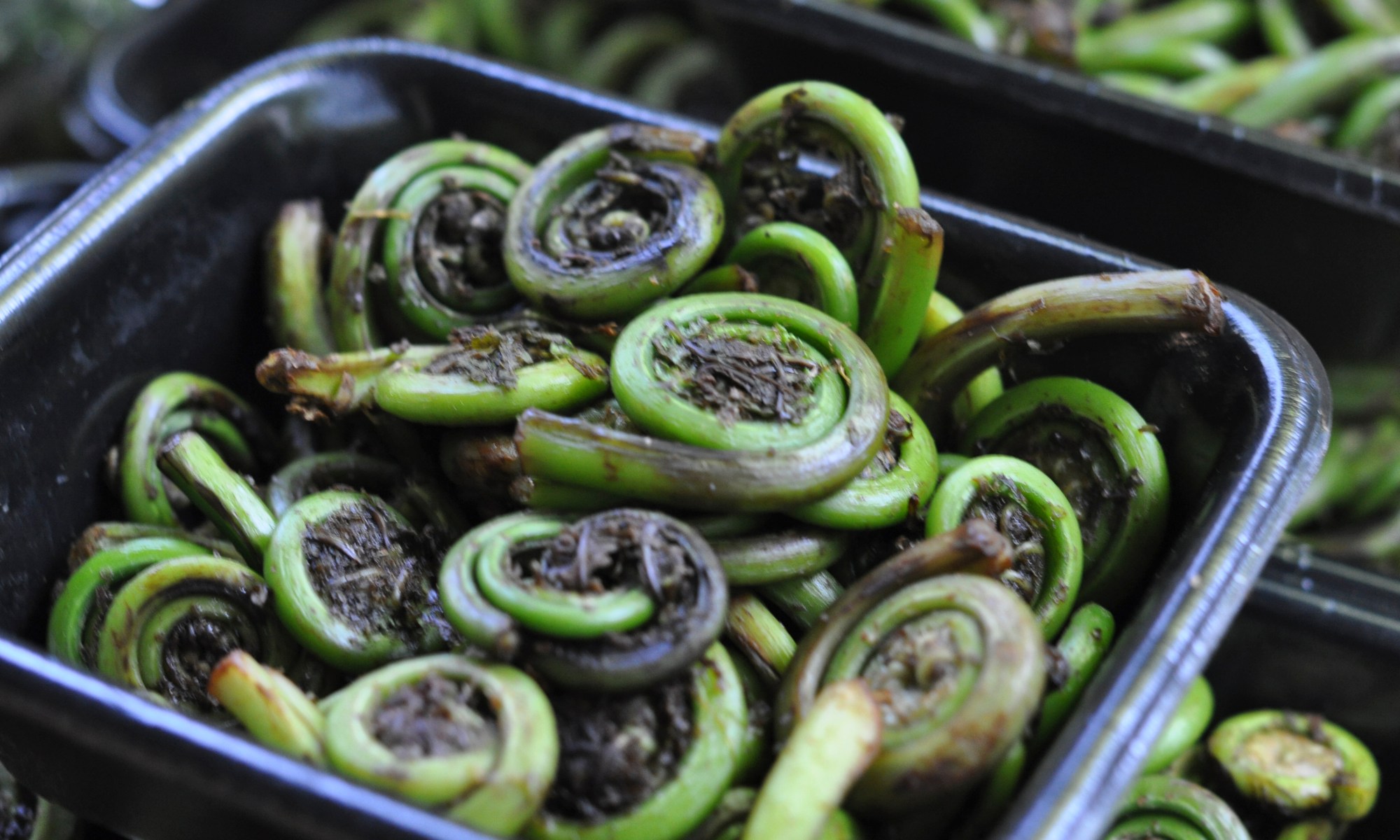
The poem progresses in a kind of three steps forward, one step back fashion, but each step creates not only distance on the page but a panning further back, including a larger swath of experience. For example, in the initial image, the speaker hears โ€œtiny criesโ€ coming from โ€œhundreds of fiddlehead ferns boiling in an enormous potโ€ and considers โ€œwhat an odd personโ€ she is to hear the voices of vegetables. The speaker quickly moves to a new image of โ€œa mouse curled behind my third eye,โ€ but links this metaphorically  in several ways to the fern image: the mouse โ€œfurls like a fernโ€ and โ€œwhimpers like a fern being boiled.โ€ In turning from the mouse, Seaton pans out from the more immediate and tangible images of ferns and a mouse to DNA, then undertow, then planet earth and brain cells, and so on. Each image references a previous image, sometimes the one it directly follows and sometimes one several lines back in the poem. In this way, the poem jerks the reader forward and back through images, the mind building connections and sidetracks and dead-ends as it continues forward.

Along with the images are two pronouncements, which seem to be the core of the poem and which all resurface at somewhat regular intervals. The first is the idea of the speaker as odd, which shows up twice in the first quarter of the poem and then is reprised about four-fifths of the way through the poem: โ€œthereโ€™s something odd, I thought, about someone whose imagination runs this wild.โ€ Second is the poemโ€™s addressee and the specific phrase used three times when addressing this person: โ€œwhen you hurt me.โ€ This phrase appears at the beginning of the poem and twice about two-thirds of the way through the poem. These two concepts, the speakerโ€™s oddness and the hurt which the speaker is addressing, seem connected. As the poem moves out and out from image to image, the speaker seems to be searching for answers: why am I odd, and why did you hurt me? Did you hurt me because I am odd? Or perhaps even the question, is it because Iโ€™m odd that what you did hurt me? I can relate to these questions. I imagine many people, like me and this speaker, have a part of us that wonders if we are the true source of the hurt perpetrated against us. Sometimes itโ€™s easier to believe that we are wrong than that we have been wronged by someone else. This poem seems to wrestle with such feelings.

Ultimately, the poem wants to abolish these questions by creating an existence where everything is interconnected, so individual differences become irrelevant. This is discussed in terms of the Earth as consciousness: โ€œthis planet Earth, is she alive and weโ€™re her brain cells, / each one flickering, going out, coming back to life?โ€ And the ending of the poem returns to the individual as simply one brain cell, the Earth as one whole being: โ€œI can do this, I say, / and the planet shifts imperceptibly. From a great distance, she appears to be at peace.โ€ The individual cells are in turmoil from day to day, but the whole creature seems well and peaceful when viewed from farther out.

Not only is this enlargement a way for the speaker to create something bigger than herself to put her pain in perspective, but she also creates a sympathetic sufferer. In the third line, the speaker says, โ€œโ€ฆwhen you hurt me, I curled like a mouse behind my third eye.โ€ And here, at the end of the poem, the speaker is to the earth what that mouse is to the speaker: a small, internal part, an acute pain not visible for someone looking at the whole being.

The space behind her third eye is where the speakerโ€™s pain resides and also from where all the questions seem to bloom, keeping her separate from others, and sweeping her away seemingly without her consent. Seaton writes, โ€œ Think ofโ€ฆthe way a sudden wave can drag a child underโ€ฆher / siblings farther away and more powerless than she ever imagined, the pure and ecstatic / irreversibility of undertow.โ€ Later, the ocean returns:

โ€ฆWhen you hurt me, I evolved like a backboned sea creature, translucent
nervous system sparking along in the meanest deep where I was small enough not to care
my passions ran to swimming, gulping, spitting bubbles back into new oceans.

Here, the speaker is again out of control of her rambling thoughts and back in a loneliness reminiscent of one from her childhood. The childlike state of her mind saves her, though, from feeling too bad about thisโ€”sheโ€™s โ€œsmall enough not to care.โ€

But small as she is and in this deep place, she is not seen, and her pain is not seen. In her aloneness, she wonders if the pain is really her own doing, that the โ€œyouโ€ of the poem is not to blame as much as her own oddness is. Yet the poem doesnโ€™t read as if the speaker is giving in to despair. Itโ€™s a playful poem, one in which many questions are raised and many synapses connected but which also lands on acceptance. The Earth cares for each small part we humans play, sending โ€œWinter and red-tailed hawks when we least expect them,โ€ nourishing the speaker into her resolve: โ€œI can do this.โ€ And it is in this same way that I imagine the speaker cares for her poor mouse, trapped and hurt within her.


Seaton, Maureen. “Fiddleheads.” Little Ice Age, Contemporary Classics Poetry Series, 2001, pp. 25-26.

Questions Without Answers In “Is It True?” By Anne Sexton

Anne Sextonโ€™s The Awful Rowing Toward God is obsessive in that best of ways which all the best poetry is. Every poem contributes to the theme of the book, which creates an extremely satisfying whole. But calling this book โ€œsatisfyingโ€ may be misleading: itโ€™s a book of hungers and questions. In the middle of the book is Sextonโ€™s long poem โ€œIs It True?โ€ This poem is strategically placed as a centerpiece for the manuscript, illumining the central questions and themes of the book. A closer look at this poem is a good way to get a sense of Sextonโ€™s big questions and feelings on this most existential question which the book poses: Is there a God? How can we know?

โ€œIs It True?โ€ is rife with repetitions. The poem swirls and circles. It moves us in and out of questions which never resolve, which is just how uncertainty presents itself in life. Sexton captures exactly how an existential crisis feels: the worry that we are not good enough, the search in every part of life for an answer that feels satisfying, the return again and again to that same question: โ€œIs it true?โ€

The words โ€œis it trueโ€ are repeated thirteen times in the poem. All but once Sexton creates couplets of โ€œIs it true? / Is it true?โ€ Every time the speaker seems to be approaching understanding of a sort, this refrain echoes. Interestingly, a little over halfway through the poem Sexton has these lines which break the refrain:

If religion were a dream, someone said,
then it were still a dream worth dreaming.
True! True!
I whisper to my wood walls.

Sextonโ€™s speaker searches everywhere for answers and the only one she seems sure of is that the search is worth it, even if the answers continue to elude.

Sexton repeats phrases within a stanza in ways that reference mantra, liturgy, or religious text. Three times she includes sections of blessing; first, blessing womenโ€™s rights; second, blessing โ€œall useful objectsโ€; and third, blessing animals and plants. Additional sections that feel like sacred texts include the repetition of the Hare Krishna mantra, a section of praise (โ€œLet me now praise / the male of our speciesโ€), and the following intriguing section which reads like a prophesy:

In heaven,
there will be a secret door,
there will be flowers with eyes that wink,
there will be light flowing from a bronze bell
there will be as much love as there
are cunners off the coast of Maine,
there will be gold that no one hides
from the Nazis,
there will be statues that the angel
inside of Michelangeloโ€™s hand fashioned.
I will lay open my soul
and hear an answer.

The answer which follows Iโ€™ll examine later; for now, I am interested in how this section moves from enigmatic to specific. The first five of these lines could be pulled from the Bible or another religious textโ€”maybe Hindu scriptures. Then, Sexton gets specific: โ€œMaineโ€ and โ€œNazisโ€ put us firmly in the modern era and the new world. The prophet here is transformed from sacred mystery to something tangible and possible in contemporary times.

Sexton creates motifs which, in their insistence, begin to feel obsessive. One major theme in this poem is hunger and eating. In fact, the prophetic section quoted above concludes,

I will lay open my soul
and hear an answer.
Hello. Hello. It will call back,
โ€œHereโ€™s a butter knife,โ€ it will say.
โ€œSo scrape off your hunger and the mud.โ€

Before this prophesy, Sexton has mentioned hunger, eating, or food at least five times. A notable example is when the speaker is asked โ€œWhose God are you looking for?โ€ and responds, โ€œa starving man doesnโ€™t ask what the meal is.โ€ The idea returns another five or more times. โ€œEggsโ€ specifically are mentioned three times, and โ€œbutterโ€ is mentioned twice. The first mention of butter is above; it returns in the poemโ€™s denouement:

Maybe Iโ€™m dead now
and have found him.
Maybe my evil body is done with.
For I look up,
and in a blaze of butter is
Christ,
soiled with my tears,
Christ,
a lamb that has been slain

The repeated โ€œmaybeโ€ keeps the conclusion from holding the satisfaction of an unequivocal answer, but Sexton allow here for the possibility that the hungerโ€”for answers, for something to truly fill the soul and bodyโ€”is sated in Christ as meal, of sorts.

I must backtrack here to explain another motif throughout, a countermelody to the hunger and the blessings/praises: the body as evil and poisoned. Early in the poem, Sexton relays a conversation the speaker has with a priest about how she is evil. The priest doesnโ€™t understand at first: โ€œDo you mean sin? he asks,โ€ and the speaker says, โ€œWhat I mean is evil, / (not meaning to be, you understand, / just something I ate).โ€ While the speaker is hungering after God, she seems also to be filled with evil. At other points, the evil is refenced as the devil, who โ€œhas crawled / in and out of meโ€ and as shit, which โ€œwas poison / and the poison was all of me.โ€ Just as the speaker longs to be filled with goodness, she feels filled with evil. This tension heightens the need for answers:

Because to one, shit is a feeder of plants,
to another the evil that permeates them
......................................
So much for language.
So much for psychology.
God lives in shit โ€“ I have been told.
I believe both.
Is it true?
Is it true?

Again here, all that can be repeated is the deepest question of the soul, โ€œIs it true?โ€ The tension between these differing viewpoints remains unresolved, leaving room for subjective truths.

Sexton ends this poem by returning to the bookโ€™s motif: the rowing of a boat upon the sea toward, as she calls it in the bookโ€™s final poem, โ€œthe island called God.โ€ Here are the final lines of โ€œIs It True?โ€:

Christ,
a lamb that has been slain,
his guts drooping like a sea worm,
but who lives on, lives on
like the wings of an Atlantic seagull.
Though he has stopped flying,
the wings go on flapping
despite it all,
despite it all.

If the speaker is upon the sea rowing, and God is the island, Jesus becomes here a third party, one who was blessed to be able to fly above the sea and island, separate. From his vantage, perhaps he knew the answers. But he also fell, was slain, became a meal for the speaker. Jesus, though, is not yet dead. Something continues to beat. And the book goes on, and the rowing goes on, and the questions remain unanswered in the poem, as they are in life.


Sexton, Anne. โ€œIs It True?โ€ The Awful Rowing Toward God, Houghton Mifflin Company, 1975, pp. 48-57.

Sexton, Anne. โ€œThe Rowing Endeth.โ€ The Awful Rowing Toward God, Houghton Mifflin Company, 1975, pp. 85-86.

Leave the Red Rags Behind: Miroslav Holub’s poem “Bullfight”

Read “Bullfight” here.

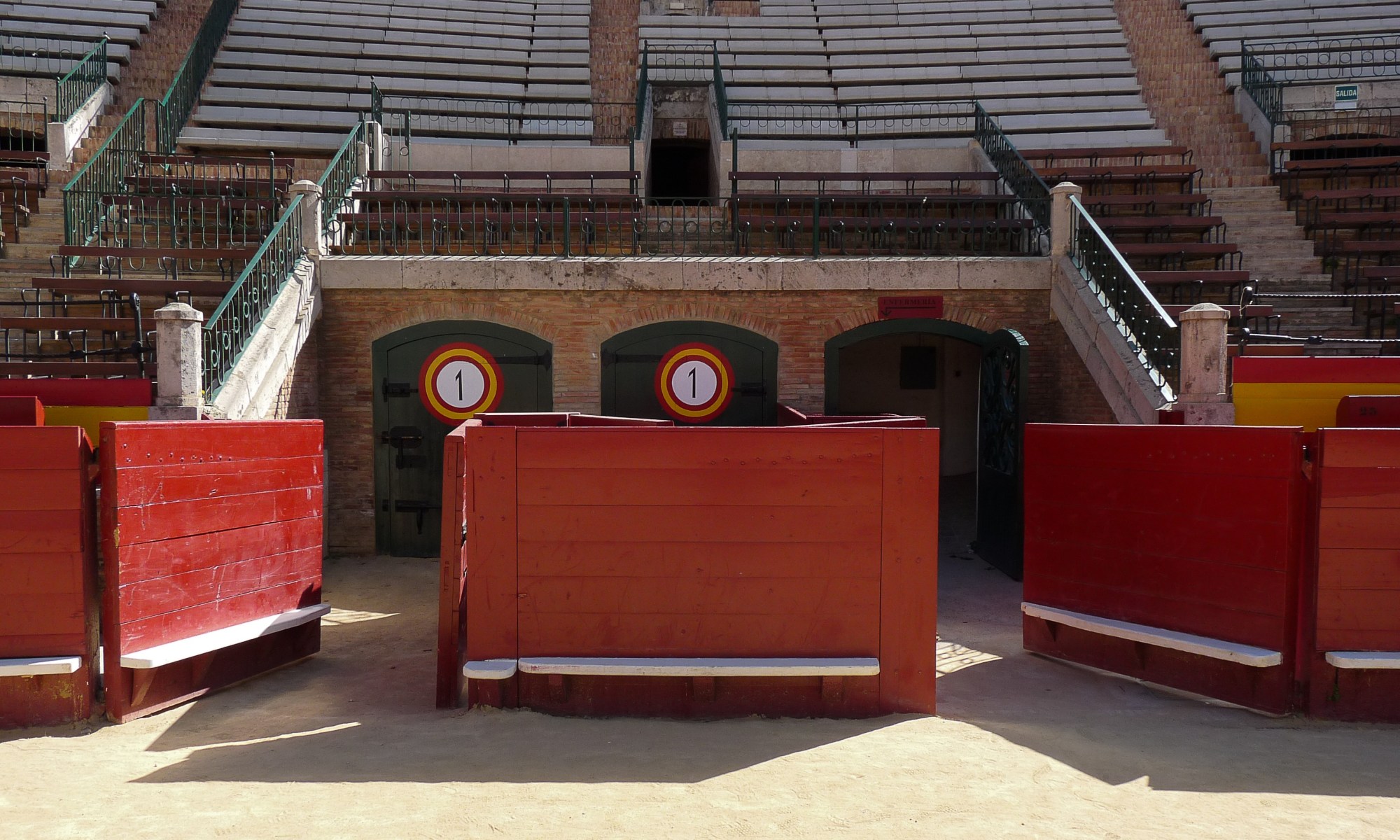
Czech poet Miroslav Holub was, by his own admission, a scientist first and a poet second. Perhaps what this means is that his poetry couldnโ€™t exist without his work as a scientist, which I can understand. Our obsessions are what drive our poetry; if Holub were to deny his obsession, his poetry would serve no purpose. Iโ€™m not familiar with Holubโ€™s work as a whole, but I recently came across his poem โ€œBullfightโ€ in the anthology The Rattle Bag, and was drawn to the stark language and simple but effective use of sentence structure.

It isnโ€™t surprising to me that such a poem was written by a man who considers himself a scientist first. There is a kind of distance to the language, and a cleanness. Itโ€™s not flowery or sentimental; itโ€™s image-driven, which is what gives it its power. Here are a few lines of the narrative center of this poem:

Red blood spurts between the shoulder-blades.
Chest about to split,
tongue stuck out to the roots.
Hooves stamp of their own accord.

Red is of course an obvious choice for the mood Holub is setting in this poem, and it appears four times. First, โ€œRed flags flutter,โ€ then the above line, then โ€œthe red rags,โ€ and towards the end of the poem, โ€œthe black-and-red bull.โ€ Two allusions to the matadorโ€™s cape, two to the blood of the bull. Holub draws an easy parallel here between human violence and animal sufferingโ€”the core of the bullfight. Also note the three latter lines above. Each is pared down, the language simple and straightforward. Holub isnโ€™t evoking emotion through deep detail but rather through stark image. Thereโ€™s no gauzy poeticism, just the body of the bull in its animal nature. Plain, honest.

One of the most striking aspects of this poem for me was Holubโ€™s use of parallelism and repetition to quickly create setting and emotion. As mentioned above, the first two uses of โ€œred,โ€ set four lines apart, are parallel in structure, but the stronger examples come in three places in the poem: the opening, the climax, and the closing. Hereโ€™s the opening:

 Someone runs about,
 someone scents the wind,
 someone stomps the ground, but itโ€™s hard. 

These lines set up a couple feelings for me. First, the repetition of โ€œsomeoneโ€ gives me a sense of confusion; who are these someones? The speaker canโ€™t seem to parse one from another, canโ€™t fully process the scene clearly. Second, I get a sense of animal immediacy. The following parallel verbsโ€”โ€œruns,โ€ โ€œscents,โ€ โ€œstompsโ€โ€”are all very animal words, full of physicality. Pairing such words alongside โ€œsomeoneโ€ makes for images that could be describing the bull as easily as the matador, picador, and bandoleros.

The second use of parallel sentence structure comes at the high point of the poem. The bull is severely injured but not yet fatally wounded. But all the players have been named and are deep in the action, the final blow soon to fall. Holub writes:

 And then someone (blood-spattered, all in)
 stops and shouts:
 Letโ€™s go, quit it,
 letโ€™s go, quit it,
 letโ€™s go over across the river and into the trees
 letโ€™s go across the river and into the trees,
 letโ€™s leave the red rags behind,
 letโ€™s go some other place, 

The more times โ€œletโ€™s goโ€ is repeated, the more I feel the desperation of this โ€œsomeone.โ€ There is no real possibility that killing will be avoided now. And the desperate repetition is more effective in meting out panic than further description of the violence could be.

The second-to-last stanza includes the repetition of the phrase โ€œand be dragged awayโ€ three times. Because parallel structure has been set up as a norm within the poem, this repetition doesnโ€™t come off as overdone but adds a final push to the last scene. We end not with any of the human elements but within the mind of the bull himself, who will โ€œfallโ€ and โ€œbe dragged awayโ€

 without grasping the way of the world,
 without having grasped the way of the world,
 before he has grasped the way of the world. 

The final repetition is parallel, yet not perfectly so, the tense shifting from present, to present perfect, to present continuous. โ€œContinuousโ€ seems a good word for this final tense; the bull remains not quite killed, and not understanding, ad infinitum. Both the repetition and the changing tense aid this final image: repetition by creating a cyclical, never-ending feel to the event, and changing tense by creating a sense of always getting closer to, but never reaching, understanding and/or the release of death.


Holub, Miroslav, “Bullfight.” The Rattle Bag, edited by Seamus Heaney and Ted Hughes, Farrar, Straus and Giroux, 2005, pp. 90-91.

What right, for art? A look at “The Last Class” by Ellen Bryant Voigt

Read “The Last Class” here.

Why do poets write poems? I wonder if this question is asked most often by the poets themselves. We spend our days shut away with our own words, filing the edges, hoping what we hone down will become a pure crystal of meaning, a distillation of truth. But the more time we spend with our words, the more we begin to doubt that what we have created holds meaning anymore. Have we, by pruning the boxwood of our words into a perfect sphere, or a flamingo, or any other arbitrary shape of our art, created something more meaningful than the natural chaos of the original shape?

These are the questions Ellen Bryant Voightโ€™s poem โ€œThe Last Classโ€ evoke for me. For her, the dilemma is taken a step further: sheโ€™s not just writing poetry; sheโ€™s teaching it. She is standing in front of young people and saying with authority, โ€œHereโ€”this is how you write a poem,โ€ which is, of course, an impossible task. Richard Hugo wrote that he often started a poetry class by saying, โ€œYouโ€™ll never be a poet until you realize that everything I say today and this quarter is wrong. It may be right for me, but it is wrong for you.โ€ Does the teacher of poetry eventually start to believe what they are teaching is also wrong for themselves?

Voigt starts โ€œThe Last Classโ€ as if she were teaching: โ€œPut this in your notebooks: / All verse is occasional verse.โ€ A risky couple of lines to begin a poem. Itโ€™s almost like putting the moral of the fable at the beginningโ€”a didactic setup, not what we think of as the start to a lyric poem. But thatโ€™s the point: she is bringing didacticism to the forefront right away to prove its weakness as a method for teaching or writing a poem. She wants readers to enter this poem with skepticism because thatโ€™s what sheโ€™s feeling, too.

The rest of the first stanza sets up a scene for usโ€”one which seemed, in the experience of it, to be an opportunity for a poem. She is in a Greyhound station, and she encounters a drunk man who is bothering a woman. She doesnโ€™t intervene, but we get the idea that Voigt is disturbed by something about the encounter. She describes her mood as โ€œdistracted / and impatient.โ€ The stanza concludes:

 A poem depends on its detail
 but the woman had her back to me,
 and the man was just another drunk,
 black in this case, familiar, dirty.
 I moved past them both, got on the bus. 

The speaker seems to feel she missed the opportunity, in her hurry, to see anything that might set this scene apart from all such scenes of mild public disturbance. And there are many questions: what was the woman feeling? Hard to know since she had her back to the speaker. If the man is โ€œjust another drunk,โ€ why bother writing about him?

In the second stanza, Voigt considers the process of writing a poem about this scene. I love how layered this poem feels: a poem about a time when Voigt interrogated her motives and process for writing poetry, set within a framework of teaching the process of writing a poem. She writes, โ€œThe man is not a symbol. If what he said to her / touches us, we are touched by a narrative / we supply.โ€ Voigt supplies such a narrative for us:

 he meant to rob her of those few quiet
 solitary moments sitting down.
 waiting for the bus, before she headed home
................................
 perhaps in a room in Framingham,
 perhaps her child was sick. 

Voigt shows how a poetโ€”or any writer, for that matterโ€”may have the impulse to flesh out a moment in time to create drama, poignancy, sympathy. We need to know all about this woman to feel sorry for her. We also want to have a reason to dislike this man who does not measure up to our ideas of respectability, and I wonder if this is Voigtโ€™s biggest reason for telling this cautionary tale. The writer, out of prejudice, might humanize the woman but demonize the man who, Voigt says, was saying โ€œโ€˜Iโ€™m sorry, / Iโ€™m sorry,โ€™ over and over.โ€ Perhaps he is not a demon. Should we make him one, for the sake of a nice, simple poem? Or even for a โ€œlarger truthโ€ that we think our fabrication might reveal?

The next stanza has the speaker on her bus, and we see a leap here that helps drive home the dubious nature of creating fake lives for real people for the purpose of the poem: โ€œI postponed my satchel of your poems / and wondered who I am to teach the young, / having come so far from the honest love of the world.โ€ There is nothing unique, to Voigtโ€™s eyes, about this moment, but because she experienced it, and perhaps out of mild guilt for not intervening, she feels the need to write about it. But in writing, she questions the validity of her right to write about the scene because of how little she knows about the altercation and because her limited perspective might lead to the omission of important details.

Iโ€™m not sure of the original source of the idea of โ€œcoming up for airโ€ in a poem, but itโ€™s an idea I first learned from Tyree Daye, in a workshop during my MFA studies at Converse College. The idea is that the process of writing a poem is akin to swimming through a river of images. Occasionally, the writer must come up for air, departing from image for a moment to make a statement. Voigt does so here, and additionally sets off her statement with a double indent, a space in which the reader also must take a breath: โ€œI wanted to salvage / something from my life, to fix / some truth beyond all change.โ€ This is the idea Voigtโ€™s been leading us towards, but the speaking of the statement is not enough for a good poem. Voigt dives back into the river for a final image. Here are the last lines of the poem:

...........................to fix
 some truth beyond all change, the way
 photographers of war, miles from the front,
 lift print after print into the light,
 each one further cropped and amplified,
 pruning whatever baffles or obscures,
 until the small figures are restored
 as young men sleeping. 

It seems risky to me that Voigt takes us to a place so disparate for the final image in this poem, but the metaphor is perfect, and the risk pays off. Is it right to restore these youths from death to sleep? Has the photographerโ€”or the poetโ€”created truth, or obscured truth? Does the cropping of an image bring the subject into greater focus, or remove meaning?

A poem is not a snapshot of reality. As a poet, Voigt realizes she will always be cropping the photo to create meaning. She also will always be questioning whether she framed the right subject, whether she captured the correct exposure, whether the details she enhanced led to a poem of substance and truth. Itโ€™s a question worth asking, for any writer, who finds themself stealing moments from othersโ€™ lives for their poems.


Hugo, Richard. The Triggering Town. W. W. Norton & Company, 2010.

Voigt, Ellen Bryant. โ€œThe Last Class.โ€ Cries of the Spirit: A Celebration of Womenโ€™s Spirituality, edited by Marilyn Sewell, Beacon Press, 1991, pp. 290-291.

Mystery and the Thin Place in “Language Barrier” by Robert Penn Warren

In Robert Penn Warrenโ€™s book Being Here, the poem โ€œLanguage Barrierโ€ comes amid poems written from the quiet desk of a man who sees many of his active years as already behind him. He reflects on life and aging, on death and the afterlife, within natural imagery, often recalling moments from his past in which he had adventures in the wilderness. โ€œLanguage Barrierโ€ is one iteration of this, and it drew me in especially because of its ruminations on death and God.

I recently learned the term โ€œthin place,โ€ which is used in religious and spiritual circles to describe moments in which the boundary between the plane of human existence and a larger, eternal, and unseen plane grow very close to one anotherโ€”in a thin place, the separation between God and the physical seems no more than a thin gauze. I think the scene Warren paints in โ€œLanguage Barrierโ€ is of one of his own experiences of a thin place.

Warren begins with a stanza of pure description, leaning heavily on โ€œsnowโ€ and โ€œblue,โ€ both of which appear three times in five lines. There is a piercingness in the language, a pull between heat and coldโ€”โ€œsnow-glitter, snow-gleamโ€ on the peaks above, and waters below which โ€œface upward to sky-flaming blue.โ€ The landscape is anything but static: the โ€œpeaks scream joyโ€;  โ€œthe shelf falters, fails.โ€ The mountains and cirques below are full of movement, perhaps even agency, and each element is in conversation with the othersโ€”the peaks screaming joy to the sun, the waters facing upward, the shelf, giving way under the great distance below and tumbling in a โ€œtangle of stone.โ€

We see a world which speaks, perhaps of this struggle between warmth and cold, and Warren brings the struggle to a head in the first line of the second stanza in the simile โ€œlike Hell frozen,โ€ which, if a bit clichรฉ, also captures this deep dichotomy of good (or maybe joyโ€”the joy of the peaks) struggling against evil, warmth and cold pitted against one another. The speaker as โ€œIโ€ never shows up in this poem; the closest Warren gets to an โ€œIโ€ is in the second stanza, when the speaker draws inward, reflecting on himself in relation to the landscape: โ€œAlone, alone, / What grandeur here speaks?โ€ Whereas the landscape is active, even interactive, the speaker stands apart, alone, but only for a moment because in the very next line, the speaker expands to include a larger humanity: โ€œThe world / Is the language we cannot utter. / Is it a language we can even hear?โ€ I canโ€™t help but pause in this space as a reader, thinking about the language of the world, especially as it relates to human destruction of the environment. The world has a language; we are separate from it. The world is active, alive, but because we donโ€™t hear it speak, we donโ€™t care enough about it to take good care of it.

At this point, Warren turns from the scene to a later timeโ€”โ€œYears passโ€โ€”and now, the speaker addresses us in second person: โ€œat night you may dream-wake / To that old altitude, breath thinning again to glory.โ€ In this way, we move from โ€œaloneโ€ to a collective โ€œweโ€ and then back to singularity, this time focused not on the speaker but outward, toward the audience. We are each of us alone, reflecting; but in our aloneness, we find similarity, a collective.

Additionally, time seems to have changed the landscape, perhaps dulling the awe to something less fierce, because itโ€™s no longer โ€œHell frozenโ€ but rather โ€œglory.โ€ Iโ€™m sure these word choices are not an accident; Warren is thinking about death. Perhaps, he is thinking about how as we age, if we live long enough to grow tired in our old bodies, death becomes less scary, dulls from terror to a welcome rest. Still, whether the world is hell or heaven, it remains a mystery, as much upon later reflection as upon that moment in the thin place. Warren writes, โ€œWhat, / Long ago, did the world try to say?โ€

After these two middle stanzas that feel more meta, both of which end with questions, the fourth stanza mirrors the first in that Warren returns here to pure description, now of the homely scene from which the old body reflects: โ€œThe stars have changed position, a far train whistles / For crossing. Before the first twitter of birds.โ€ In the fifth line, Warren shifts focus again from loneliness to the corporate experience, writing, โ€œYou may again drowse. Listenโ€”we hear now / The creatures of gardens and lowlands.โ€ This gathering together seems to me reminiscent of death again, perhaps of heaven or the garden of Eden. It is a waking from sleepโ€”an image of returning to life, but in the context, it feels like an ending, a waking to an entirely different world.

And in this new world, the answers to the questions that the lonely humans ask of the world come clear, if not in the straightforward way we would prefer. The single-line final stanza reads, โ€œIt may be that God loves them, too.โ€ The implication here, I think, is that God loves usโ€”but just as much as God loves us, God also loves the world which is so mysterious to us. Our view, even from the thin places, is limited to what our lonely minds can imagine. And in poetry, such as this poem, I think we come as close as we can to understanding.


Warren, Robert Penn. “Language Barrier.” Being Here: Poetry 1977-1980, Random House, 1980, p. 72.